Contrast Therapy: End with Hot or Cold?
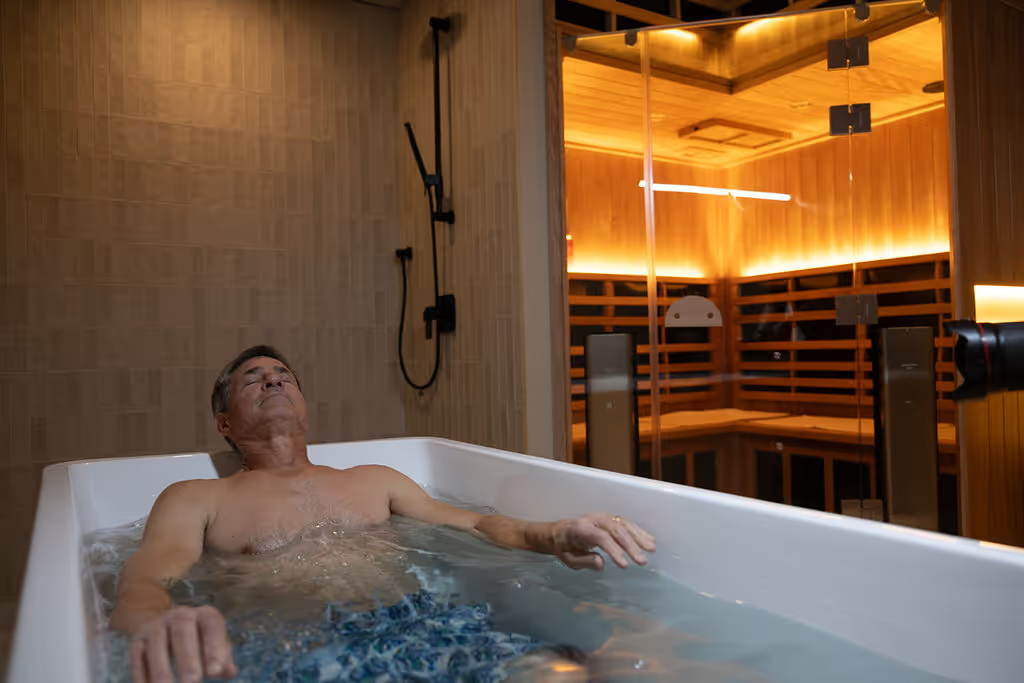
A question we often discuss with our guests is: "Should I end my contrast therapy session with hot or cold?"
The short answer - Both are good; it depends what your goals are.
In general, ending with cold gives you a metabolic and mental boost so you’re energized and alert. Ending with heat tends to relax you and better prepare your body for sleep or rest.
Exploring the details is an interesting way to explore the physiological and psychological effects of hot and cold on your body.
Cold Finish → The Energy Path
Ending with cold is simple yet powerful: let your body reheat naturally after cold immersion, rather than immediately heading to a warm shower or sauna. What does this do?
- Metabolic Boost: When you end with cold, your body has to work hard to reheat itself. This process requires significant energy. According to Dr. Susanna Søberg, “Your brown and beige fat do the hard work, boosting your metabolism and burning calories in the process,” effectively training your metabolism to run more efficiently.
- Adrenaline Boost & Mental Alertness - Cold immersion triggers a massive release of adrenaline and norepinephrine. You probably notice a post-dip “high" and intense mental alertness. If you have a busy day ahead or need to feel invigorated, this is your path.
- Calm, Confident & Strong – If you’ve cold plunged before, you likely have felt this calm confidence and strength afterwards. No matter how short or long your plunge was, you’ve successfully navigated a significant stressor and come out the other side totally OK. It’s a pretty amazing feeling that carries through the rest of your day. “If I can handle that cold water, I can handle anything today…” Leaving your session with this mindset is amazingly powerful.
- Physiology - The Vagus is the longest cranial nerve, stretching from your brainstem all the way down to your abdomen, touching your heart, lungs, and digestive tract along the way. It’s the primary component of your parasympathetic nervous system, guiding the "fight or flight" response. When you step into the cold plunge, your heart rate spikes and your breath quickens. This is a high-stress state. By staying calm and controlling your breath while in the cold, you are stimulating the Vagus nerve to bring your heart rate down. When you end with cold, you leave the spa primed and ready to keep calm and resilient against the stresses of the outside world.
Heat Finish →The Relaxation Path
Ending with heat prioritizes relaxation and the parasympathetic "rest and digest" state.
- The Sleep Signal: Dr. Andrew Huberman and other experts note that heating the body and then allowing it to cool down naturally mimics the body’s internal pre-sleep process. This rapid cooling acts like a biological trigger for the brain to release melatonin. This tends to reduce the time it takes to fall asleep and triggers the brain to recognize it is time for deep rest. It’s quite common (and wonderful) for a return guest to tell us “I slept better the night of my contrast therapy than I had in a long time!”
- Lowering Blood Pressure: High temperatures cause blood vessels to dilate (vasodilation), which lowers blood pressure and helps the entire body relax. Since ending with heat keeps your blood vessels dilated as you transition to rest, this keeps "the pipes open" so to speak. It allows oxygen-rich blood to continue circulating deeply into your muscles and joints afterwards, metabolic byproducts like lactic acid, enhancing recovery and reducing muscle soreness.
- Mental Calm: Psychologically, ending with heat helps lower cortisol and signals to the nervous system that the "stress" of the day is over. Dr. Kari Leibowitz (you’ll find her book Wintering on our shelves) describes this state as a shift into "soft fascination." It’s a restorative mental state where your attention isn't being gripped by a screen or a to-do list, but is instead gently resting on the warmth of your skin and the rhythm of your breath. It turns the final moments of your experience at The Rise into a mental bridge between the busy day and your rest. Leibowitz often discusses the sauna as "space out of time” - a psychological sanctuary with no screens.
At the end of the day, there’s no better way, just different ways depending on what you’re seeking. Try them both and see how they make you feel!
Sources & Additional Reading:
Dr. Andrew Huberman (Huberman Labs) interviews Dr. Søberg